TL;DR: Malaysia can be a strong ASEAN base for businesses seeking a balance of regional access, manufacturing capabilities, talent, infrastructure, and operating efficiency. Its suitability depends less on how it ranks against neighboring countries and more on whether its business environment matches your company’s operational, supply chain, workforce, and expansion needs.
Key Takeaways
- Malaysia is worth considering for regional operations that combine trade, manufacturing, distribution, services, or cross-border management.
- The best ASEAN location depends on what the regional entity will actually do, not simply on incorporation costs or headline incentives.
- Companies should assess talent, taxation, licensing, compliance, supply chains, and long-term operating costs before committing to Malaysia.
- Malaysia can be particularly relevant for businesses connecting Greater China with Southeast Asian markets.
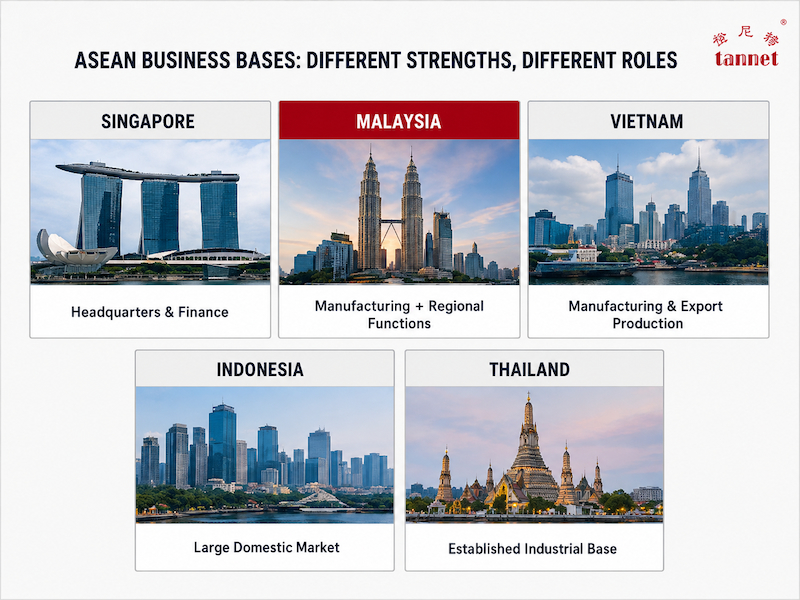
When businesses expand into Southeast Asia, Singapore leads for headquarters while Vietnam attracts manufacturing attention among commonly discussed countries options. Indonesia stands out for its large domestic market, while Thailand is known for its long-established industrial base.
Malaysia can sometimes feel like the quieter option on the shortlist, yet that is exactly why it deserves a closer look. Its value comes from balanced regional connectivity, infrastructure, manufacturing strength, talent access, and cross-border trade links with overall advantage.
Malaysia as an Alternative to Singapore
Comparing Malaysia only with Singapore can lead businesses in the wrong direction because the two markets often serve different strategic roles. Singapore serves as a regional headquarters hub, while Malaysia focuses on manufacturing and production within ASEAN networks region.
Malaysia offers functions beyond manufacturing, procurement, distribution, shared services, treasury, strategic management based on business type. It should therefore be assessed as its own operating environment rather than simply a lower-cost alternative to Singapore.
What Your ASEAN Base Actually Needs to Do
An ASEAN base only makes sense once you define whether it manages sales inventory workforce procurement manufacturing invoicing.
Headquarters vs Factory Needs
A regional management office prioritizes airports, services, banking, talent; manufacturing focuses on land, reliable power, suppliers, ports, and incentives. Distribution businesses rely on customs efficiency and transport links, while digital services prioritize talent, infrastructure, and costs.
This is why selecting a country first and designing the operation afterward is often the wrong approach. The better starting point is to clearly define the role of the ASEAN entity, then assess whether Malaysia is well positioned to support that specific function.
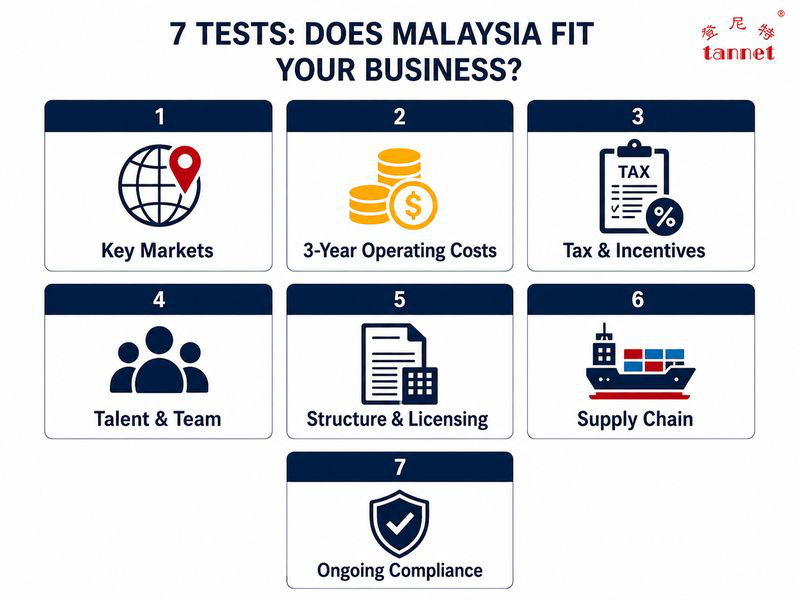
7 Tests to See If Malaysia Fits
1. Is Malaysia Close to Your Key Markets?
Malaysia is part of active regional trade networks, but advantage depends on alignment with your business footprint requirements. In May 2026, ASEAN accounted for 25% of Malaysia’s trade, with RM81.92 billion, highlighting strong regional integration level.
2. Operating Costs vs Incorporation Fees
Company registration fees are a small part of regional business costs; comparisons include salaries, utilities, insurance, logistics, compliance, benefits. A low-cost incorporation decision can become expensive if talent, licenses, suppliers are unavailable, so Malaysia suits aligned needs.
3. Does Malaysia’s Tax and Incentive System Fit Your Business?
Tax incentives influence investment decisions but should not drive as Malaysia adopts outcome-based New Incentive Framework from 2026. Investors should prioritize real business substance over incentives, focusing on economic substance and long-term viability outcomes.
4. Can Malaysia Support Your Team?
A regional base is run by people, so companies should map hiring needs, roles, skills, and expatriate requirements. This distinction matters when choosing between representative presence and full operating company as Malaysia depends on hiring feasibility.
5. Can You Use the Right Corporate Structure?
Foreign businesses have multiple routes into Malaysia, including incorporation or registration with the Companies Commission, requiring at least one locally resident director and a company secretary within thirty days. Licenses may still apply, so the structure must comply with the requirements.
6. Will Malaysia Strengthen Your Supply Chain?
Malaysia is especially relevant for physical trade, recording RM1.455 trillion in external trade from January to May 2026, up 18.3% year on year. Manufacturers must assess sourcing, logistics, ports, suppliers, and ASEAN or China trade alignment carefully strategically.
7. Can You Manage Compliance After the Launch?
Incorporation is an event, but compliance is continuous, including accounting, filings, tax, payroll, secretarial and regulatory obligations. Businesses should assess post-incorporation workload carefully, especially when management is overseas, accordingly.
No Clear Winner in ASEAN Rivalries
Ranking Southeast Asia oversimplifies diverse business realities across countries. Singapore suits headquarters and finance, Vietnam production, Indonesia large markets, Thailand manufacturing, Malaysia blends manufacturing and regional functions roles.
No single country is universally superior, and businesses often operate across multiple ASEAN jurisdictions. Comparison should focus on business model requirements, not Malaysia versus any single country alone.
Who Should Prioritize Malaysia?
Malaysia deserves particular attention when a company expects its ASEAN operation to perform several functions rather than simply maintain a legal presence.
Regional Trade & Distribution Firms
Businesses moving products between China, ASEAN and other international markets may find Malaysia’s established trade relationships and regional connectivity relevant, especially when procurement, warehousing or distribution are part of the plan.
Manufacturers & Supply Chains
Companies should examine Malaysia when access to existing industrial ecosystems, suppliers and export markets is important. Malaysia’s role in electronics and automotive supply chains makes the country more than a service-office location.
Tech & Service Hubs
Companies creating shared-service, technology, support, procurement or management teams can also consider Malaysia, particularly where staffing and operating requirements differ from those of a pure headquarters structure.
Greater China Firms Expanding into SEA
For businesses already sourcing, manufacturing, or selling in Greater China, Malaysia can support a broader China-ASEAN strategy effectively. The key question is whether the Malaysian entity effectively bridges existing Asian operations with future ASEAN growth opportunities.
When Malaysia Isn’t the Right Fit
A balanced evaluation should also consider reasons not to choose Malaysia. If customers, employees, and suppliers are concentrated elsewhere in ASEAN, Malaysia may add complexity; other jurisdictions may suit.
Malaysia is most compelling when the business activity itself belongs there. Incorporating first and then trying to justify commercial presence afterward is rarely a sound expansion strategy for companies building sustainable regional operations in Southeast Asia over the long term.
Test Malaysia Before You Incorporate
Before committing to setting up a company in Malaysia, decision-makers should be able to answer a few practical questions:
- Which ASEAN markets will drive the most revenue?
- What will the Malaysian entity do?
- Where will suppliers, inventory, and operations be based?
- What talent is needed, and will executives relocate?
- What licenses, structure, and compliance are required?
- How does Malaysia compare to alternatives over 3 years in cost, incentives, and setup?
If those answers consistently favor Malaysia, you have more than a list of advantages, you have the start of a defensible regional expansion strategy.
Why Tannet for Your Malaysia Expansion?
Choosing Malaysia is only the first decision. Tannet Group supports international entrepreneurs with Malaysia company formation and cross-border services, leveraging networks in Malaysia, Hong Kong, and Mainland China for regional business expansion needs effectively today.
Rather than treating incorporation as a standalone transaction, support extends across setup, administration, accounting, tax, and ongoing compliance for regional operations. This helps investors evaluate cross-border structures and avoid costly compliance issues early in advance.
Is Malaysia Right for Your ASEAN Strategy?
Malaysia may be one of Southeast Asia’s most underrated business bases, but the goal is not to choose Malaysia because it sounds attractive. The goal is to determine whether its location, operating environment, corporate framework and regional connections fit what your business intends to build.
Contact Tannet now!