TLDR
Professional support for an HK Certificate of Resident Status application can cover form preparation, document organisation, submission and follow-up enquiries, depending on the agreed scope. Your company still needs to supply accurate facts and review the application before it is submitted.
Key Takeaways
- The IRD does not charge a CoR application fee; professional charges cover the support you agree with your provider.
- Confirm the correct company, treaty jurisdiction and claim year before preparation begins.
- The IRD’s 21-working-day target allows for a certificate or notification, including a request for further information.
- Obtaining the certificate does not guarantee overseas tax relief, so establish who will handle the separate treaty claim.
An overseas customer asks for a Certificate of Resident Status before applying treaty relief to a payment. You may have found the right form, but still need to confirm which year it should cover, who must sign it and what supporting information to provide. Professional support can help, but first make sure you understand exactly what the provider will handle and what your company must do.
A good service should make the process straightforward, from gathering missing records and reviewing draft answers to responding to an IRD enquiry. Before engaging anyone, ask what is included, what your team needs to supply and how any follow-up work will be charged.
What the certificate is for
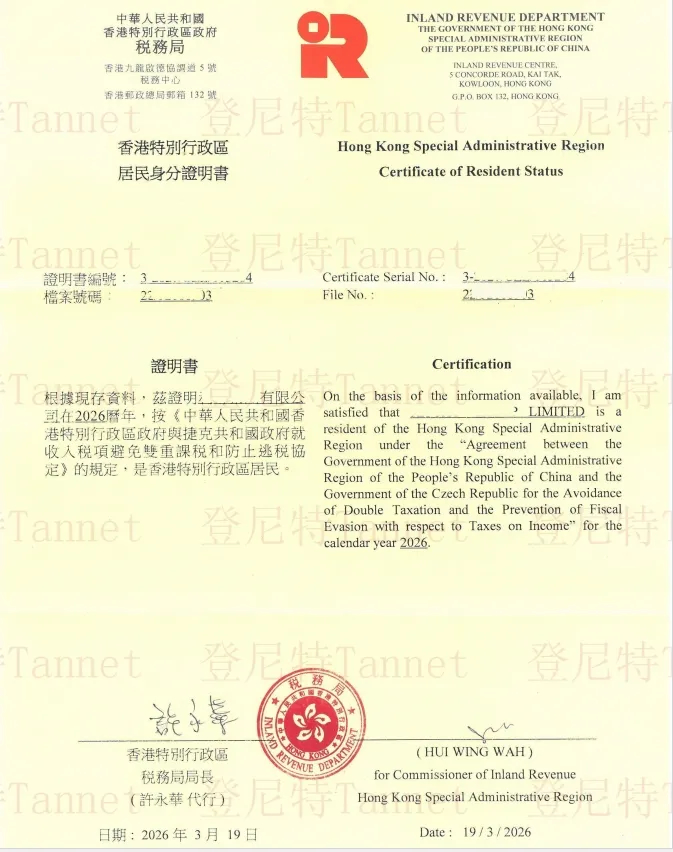
An HK Certificate of Resident Status provides evidence that a company is resident in Hong Kong when claiming benefits under a tax treaty. Before applying, confirm the treaty jurisdiction, claim year, income involved, payer’s request and certificate deadline.
An adviser can help prepare the form, organise supporting records and respond to IRD enquiries, but your company remains responsible for accurate information and approval. Agree the service scope, fee and timetable early, remembering that the IRD’s assessment and any overseas tax relief remain outside the provider’s control.
What application support can include
Application services vary, so check the scope before work starts. The following tasks are useful points to cover in that conversation.
Checking the application details
- Confirm the legal entity, treaty jurisdiction and relevant year or years.
- Check which company earned the income and which company must provide residence evidence.
- Explain the transaction and provide the relevant contract or payment details.
- Confirm whether any complex residence analysis is included in the engagement.
Preparing forms and organising records
- Select the correct form and prepare draft answers.
- Identify and organise the supporting records required.
- Check company names and other details for consistency.
- Use a checklist explaining what each document is needed for.
- Track outstanding items and assign responsibility for each one.
Coordinating approval and submission
Before the application goes out, your company should have an opportunity to review the information being submitted in its name. Agree who prepares the answers, checks the facts and completes the declaration or authorisation. If a director works overseas, arrange their review early enough to avoid a last-minute hold-up.
The IRD accepts applications online, by post or in person. An appropriately appointed service agent can also submit online through the relevant tax portal. After submission, obtain confirmation and a copy of the final application. Keep both somewhere your team can access when a colleague, payer or adviser asks about progress.
Managing follow-up enquiries
Check whether the service continues if the IRD asks for more information. Some quotations may cover responses to enquiries, while others may charge for that work separately.
Your provider should help you understand what the enquiry asks and what information is needed to answer it. For example, an enquiry about the company’s activities may need input from someone who manages its operations, while your adviser can help prepare the response.
Your company’s responsibilities
Your company is responsible for providing accurate information about its operations, transactions and records. Choose one internal contact to gather documents, coordinate answers and obtain approval when needed. Review any draft responses carefully, especially descriptions of the business, and correct anything inaccurate before approving the application.
Keep your provider informed about relevant changes, such as revised payment details, corrected company information or new requests from the payer. Use an agreed secure channel for confidential documents and confirm who should have access so everyone is working from the same records.
What the service fee covers
The IRD does not charge a fee for a CoR application; professional fees cover the assistance agreed with your provider. Compare quotations carefully to confirm whether they include form preparation, submission and follow-up correspondence.
Useful questions include:
- Which applicant, treaty jurisdiction and claim years does the quote cover?
- Are document review and necessary application appendices included?
- Does the fee include responding to further IRD enquiries?
- What changes or additional work would require a revised quote?
- Does support end when the certificate is issued?
Agree how progress updates will work and who your contact will be. Updates should cover what has happened, what remains outstanding and whether your team needs to act; ask for the reason and cost before approving any extra work.
Set a realistic timetable
Tell your provider the payer’s actual deadline and what it relates to, since a payment date and a tax filing deadline may need different planning. Allow time to gather documents and obtain internal approval before submitting the completed application.
The IRD aims to issue a certificate or notification within 21 working days of receiving a properly completed application. Your provider can explain the preparation timetable and track outstanding actions, but the IRD’s assessment is outside their control, so treat any estimated date as provisional.
Where application support ends
A certificate supports the residence part of a treaty claim but does not guarantee overseas tax relief. Check whether the service includes communicating with the overseas payer or assisting with its local claim procedure.
At handover, obtain the certificate, the submitted application and relevant correspondence. Confirm who will handle the overseas claim so the next step has a clear owner.
Why Choose Tannet
We can assist with selecting the application route, organising documents, coordinating submission and tracking enquiries. For business owners managing the process from overseas, this offers a contact in Hong Kong to help coordinate the application work.
In your initial discussion with us, explain the transaction, what records you already hold and when the payer needs the certificate. We can then discuss the assistance required and the information your company needs to supply. Agree the scope and fee before proceeding, including how any further enquiries will be handled.
Get Help with Your Application
Need help preparing an HK Certificate of Resident Status application? Ask the team to review your requirements and provide a written quotation. Starting that conversation early gives your business time to prepare the records and work towards the payer’s deadline.
Contact Tannet with your company name, relevant treaty jurisdiction, intended claim year and the payer’s request.