Hong Kong Identity Applications: Main Applicants vs. Dependants
For families planning to move to Hong Kong, one of the first questions is who should apply as the main applicant and who can join as a dependant. This decision…

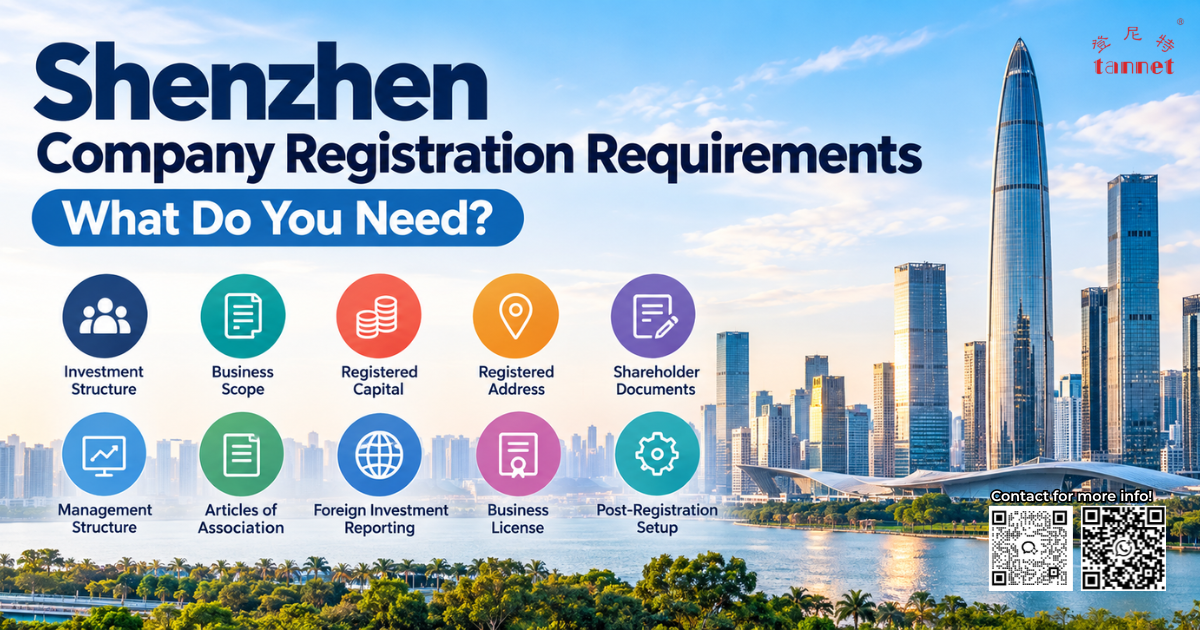
Shenzhen has become one of China’s most important destinations for international businesses looking to enter the Greater Bay Area and expand into the wider Chinese market.
From technology and cross-border e-commerce to trading, consulting and professional services, Shenzhen offers foreign investors access to a highly developed business ecosystem.
However, establishing a company involves more than choosing a name and obtaining a business license.
Understanding the Shenzhen company registration requirements before starting the incorporation process can help foreign investors prepare the correct corporate structure, documentation and operational plan from the beginning.
Here is a practical overview of what foreign investors should prepare when registering a company in Shenzhen.
One of the first Shenzhen company registration requirements to consider is the ownership structure.
Foreign investors should determine who will own the Shenzhen company and how the shares will be allocated.
Depending on the proposed investment structure, shareholders may include foreign individuals, overseas corporate entities or a combination of eligible investors.
Before registration, it is important to determine:
These decisions form the foundation of the company and will affect the registration documents and Articles of Association.
Foreign investors should confirm whether their intended business activities are open to foreign investment before proceeding with registration.
China operates a Negative List framework for foreign investment. Business activities included in restricted sectors may be subject to additional requirements, while prohibited sectors are not open to foreign investment.
Activities outside the applicable Negative List generally receive national treatment in accordance with China’s foreign investment framework, although industry-specific licenses or regulatory requirements may still apply.
This makes it important to review the proposed business model before finalising the company’s structure.
A company name must be determined as part of the registration process.
The proposed name needs to comply with China’s enterprise naming rules and should distinguish the business from existing registered entities.
Foreign investors should consider preparing several alternative company names in case their preferred choice cannot be registered.
The final registered name should also be consistent with the company’s intended business activities and corporate structure.
The business scope is an important part of the Shenzhen company registration requirements because it describes the activities that the company intends to conduct.
For example, a company may plan to engage in:
The appropriate scope depends on the actual business model.
Certain activities may also require additional licences, permits or regulatory approvals before the company can legally conduct them.
Foreign investors should therefore avoid selecting a business scope without considering their future operational plans.
A company registered in Shenzhen needs a compliant business domicile or registered address.
The appropriate address arrangement may depend on factors such as the district, business activity and local registration requirements.
Foreign investors should determine their address solution before submitting the company registration application.
The address may also become relevant when handling subsequent matters such as banking, tax registration, licensing and actual business operations.
Registered capital is another key consideration when establishing a Shenzhen company.
Under China’s current Company Law, shareholders of a limited liability company are generally required to complete their subscribed capital contributions within five years from the company’s establishment, unless otherwise provided by applicable laws or regulations.
Foreign investors should therefore avoid choosing an unrealistically high registered capital amount simply to make the company appear larger.
At the same time, the amount should be appropriate for the company’s intended operations.
Factors to consider can include:
Registered capital should ultimately reflect the company’s actual business and funding requirements.
Documentation is another important component of the Shenzhen company registration requirements.
Depending on the company’s structure, foreign investors may need to prepare documents relating to:
The documentation requirements can differ depending on whether the shareholder is an individual or an overseas corporate entity.
Documents issued outside Mainland China may also be subject to additional formalities depending on the jurisdiction, document type and applicable requirements.
It is therefore advisable to confirm the documentation requirements before preparing the application.
The Articles of Association are an important constitutional document for the company.
They generally establish key corporate matters such as:
The Articles should be prepared in accordance with the company’s actual ownership and governance arrangements rather than treated simply as standard registration paperwork.
This is particularly important where the Shenzhen company has multiple shareholders.
Foreign-invested enterprises in China are subject to foreign investment information reporting requirements.
Relevant information is generally reported through China’s enterprise registration and enterprise credit information systems in accordance with applicable foreign investment regulations.
Foreign investors should therefore consider foreign investment reporting as part of the overall incorporation and compliance process rather than viewing company registration as an isolated procedure.
Ongoing changes to relevant company information may also create subsequent reporting or registration obligations.
Once the registration application has been reviewed and approved, the company can obtain its business license.
Receiving the business license means that the company has been legally established, but it does not necessarily mean that every operational requirement has been completed.
This distinction is particularly important for foreign investors entering China for the first time.
After incorporation, the company may need to complete additional procedures before becoming fully operational.
Depending on the company’s activities, these can include:
The exact requirements will depend on the company’s business activities.
For example, a straightforward consulting company may have different post-registration requirements from a trading, manufacturing, food and beverage or regulated-services company.
Before submitting a registration application, foreign investors should ideally confirm the following:
Investment Structure → Shareholders → Business Scope → Registered Capital → Registered Address → Legal Representative → Management Structure → Articles of Association → Supporting Documents → Registration → Banking & Tax → Operations
Preparing these elements in advance can reduce unnecessary amendments and make the transition from incorporation to actual business operations more efficient.
Shenzhen is a major commercial and innovation centre within China’s Greater Bay Area.
Its proximity to Hong Kong, extensive technology ecosystem, manufacturing supply chains, logistics infrastructure and access to the wider Guangdong market make it an attractive location for many international businesses.
However, the appropriate setup depends heavily on what the company actually intends to do in China.
A technology company, trading business, consulting firm or manufacturer may face very different licensing, capital, premises and operational considerations.
For this reason, foreign investors should look beyond basic incorporation and consider how the Shenzhen entity will function after registration.
Understanding the Shenzhen company registration requirements is an important first step for foreign investors planning to establish operations in China.
The process involves more than obtaining a business license. Investors need to consider the ownership structure, business scope, registered capital, registered address, management arrangements, documentation and post-registration compliance requirements.
Planning these elements properly from the beginning can help create a smoother path from company registration to actual operations.
For international businesses considering Shenzhen as part of their China market-entry strategy, professional support can help coordinate company registration, corporate structuring, documentation, banking preparation, accounting, tax and ongoing corporate compliance.
📞 Free 1-on-1 Consultation Now,
Official Service Hotline: +86-755-82148419
Cell: +86-13823131503;+60 19-309 2363
WeChat ID: 13823131503;
WhatsApp:+86-13823131503;+60 19-309 2363
Email: mytannet08@gmail.com; susiehu@citilinkia.com