Can You Register a Hong Kong Company Remotely?
Yes, you can. A Hong Kong private limited company can generally be incorporated online, so you do not need to be physically in Hong Kong to complete the registration process.…

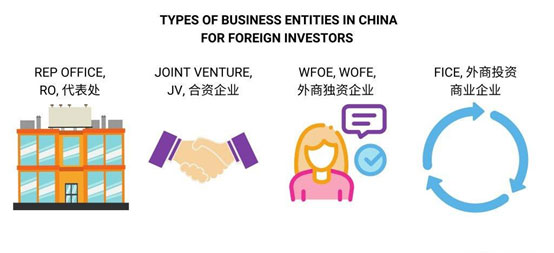
China remains one of the most attractive destinations for global investors, offering a vast consumer market, advanced infrastructure, and a continuously improving business environment. For foreign investors entering China, selecting the right business structure is a critical first step. The three most common options are Wholly Foreign-Owned Enterprises (WFOEs), Sino-Foreign Joint Ventures (JVs), and Representative Offices (ROs), each designed to meet different strategic needs and levels of commitment.
A Wholly Foreign-Owned Enterprise is a limited liability company fully owned by foreign investors, either individuals or legal entities. This structure offers the highest level of independence, allowing investors full control over operations, management, and profit distribution.
WFOEs are ideal for businesses seeking long-term development in China, especially in sectors such as trading, manufacturing, consulting, and technology. Although the setup process requires relatively higher investment and compliance efforts, it provides greater operational flexibility and a clearer exit mechanism. For many foreign companies, this is the preferred structure due to its autonomy and scalability.
A Sino-Foreign Joint Venture involves a partnership between foreign investors and Chinese entities. Ownership, profit sharing, and management responsibilities are divided based on contractual agreements or regulatory requirements.
This structure is particularly useful in industries where foreign ownership is restricted or where local expertise, market access, and government relationships are essential. While JVs can reduce initial investment burdens and facilitate faster market entry, they also come with increased risks. Differences in management style, strategic priorities, and cultural factors may lead to challenges, especially when considering long-term control or exit strategies.
A Representative Office is the simplest and most cost-effective way for foreign companies to establish a presence in China. It is not a separate legal entity and therefore cannot engage in direct profit-generating activities.
ROs are mainly used for market research, brand promotion, liaison activities, and communication with local partners. They require minimal capital investment and are relatively easy to set up. However, their operational scope is strictly limited, making them more suitable as a preliminary step before committing to a more comprehensive business structure.
Choosing the right company type in China depends on your business goals, industry requirements, and long-term strategy. A WFOE is best for full control and independent operations, a JV is suitable for strategic partnerships and restricted sectors, while an RO serves as a low-risk entry point for market exploration. Careful planning and professional guidance are essential to ensure compliance and successful market entry.
WFOEs are generally the most popular choice due to their full ownership, operational control, and flexibility.
No, ROs are not allowed to engage in profit-making activities. They can only perform non-commercial functions.
Yes, in some restricted sectors, Chinese regulations require foreign investors to partner with local companies.
Manufacturing companies: Approximately 50–60 working days after completing necessary approvals such as environmental protection, fire safety, and health inspections. The exact duration may vary based on the specific industry and project complexity.
Non-manufacturing companies (e.g., trading or consulting): Typically 5–10 working days, depending on the business scope and documentation requirements.
The key factor is your business objective—whether you prioritize control, partnership advantages, or a low-risk market entry.
With over 28 years of international business service experience, Tannet Group has supported more than 100,000 enterprises across 130+ countries in successfully entering China and other global markets. Backed by extensive local expertise and a well-established international network, Tannet delivers compliant, efficient, and strategically tailored solutions to meet the diverse needs of foreign investors.
Our comprehensive service portfolio covers company formation (WFOE, Joint Venture, Representative Office), regulatory compliance, tax advisory, accounting, and ongoing corporate governance. Through an integrated, one-stop service model, Tannet ensures that each client benefits from a streamlined setup process and a solid foundation for long-term business development in China.
For professional consultation or bespoke corporate services in Mainland China and Hong Kong, please contact Tannet via Tel: +86-755-82143348 / +86-18948308265, Email: amyhuang@citilinkia.com, or visit our official website at https://tannet-group.net/.