Key Takeaway
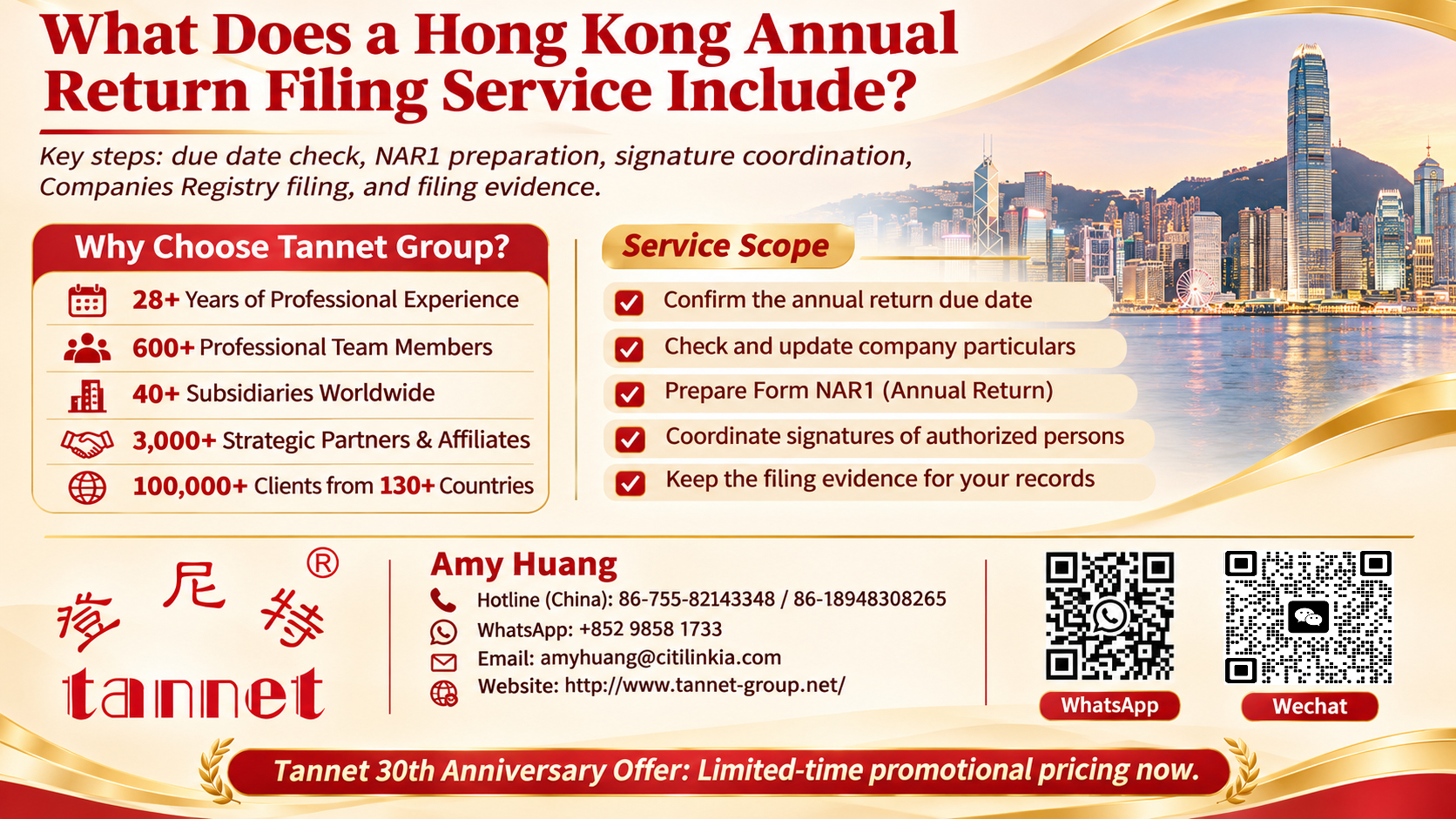
A Hong Kong annual return filing service typically covers confirming the due date, checking company particulars, preparing Form NAR1, coordinating signature and delivering the return to the Companies Registry. Ask for a copy of the return as filed and evidence showing its filing status.
This service suits directors of local private companies, especially those overseas or changing company secretaries. The written engagement determines how much checking and follow-up you receive. Business registration renewal, financial audit, tax filing and notices of company changes have separate requirements. If someone offers an “annual renewal,” ask which documents you will receive for each task.
What the company is paying someone to handle
Picture a director opening a folder marked “Hong Kong annual renewal.” Inside is a valid Business Registration Certificate and an unsigned NAR1. The certificate answers a business registration question. The unsigned draft shows what somebody prepared. Neither document tells the director whether the annual return reached the Companies Registry.
A useful engagement names the company, the return year and the work the provider will complete. It distinguishes preparation from delivery and identifies who follows up if the Registry sends a query. Without those details, providers offering “annual filing” may be quoting for different outcomes.
For a local private company incorporated in Hong Kong, the annual return generally falls due within 42 days after its incorporation anniversary. Its financial year end may fall months later. A filing service should identify the applicable anniversary and leave time for the appropriate officer to review the draft.
Which records should the provider check?
Form NAR1 reports company particulars as at the return date. These include the registered office, directors, company secretary, share capital and relevant member details. Last year’s return provides a starting point. The company’s own records show what happened since then.
Consider a company incorporated on 10 June. A director resigns on 20 June, before the annual return is signed. The outgoing director was still in office on the anniversary. The later resignation has its own notification requirement. A draft based only on today’s management list can get the historical position wrong.
A provider may compare the draft with the register of members and earlier filings. Ask how it handles conflicting dates and which source it will ask the company to confirm. The directors may know about a recent decision that the previous secretary never received.
What should the director receive for review?
The draft should let the reviewer recognise the company and the date it describes. A useful covering note draws attention to facts that need a decision. “Please confirm who held these shares on the anniversary” gives a director more to work with than “please sign here.”
The Registry requires a director or the company secretary to sign the return. A filing agent can organise the document and deliver it. Being engaged to prepare it does not, by itself, make that agent an authorised signatory. An overseas director should establish who will sign while the return is being prepared.
The person handling the engagement should also know where to send an urgent query. An inbox belonging to a former employee can hold up a signature even when every entry is correct. Providing one available contact helps the secretary resolve factual questions before the filing window closes.
What does a completed filing look like?
Ask for the final return, the relevant Registry acknowledgement or reference, and an explanation of the recorded status. Keep these together under the correct company and return year. If the provider says “submitted,” ask whether the document has been registered or is still being processed.
A director taking over from another team can check the Companies Registry’s Document Index Search for that company and year. This is particularly helpful when the accounts department holds an invoice but the departing secretary cannot supply the return. An invoice records a commercial transaction between client and provider.
Agree who will deal with any rejection or request for clarification. The Registry can reject an improperly signed return. A client who expects the provider to follow up should see that responsibility in the engagement and know when the provider will report the outcome.
This distinction matters during a bank review. If the bank asks for the latest filed return, a cover email saying “sent for signature” cannot answer its request. Ask which version the bank needs and whether it also wants evidence of registration before sharing the company file.
Which services need separate agreement?
Business registration renewal concerns the Inland Revenue Department. Its renewal demand note and the resulting certificate serve a different purpose from NAR1. If a provider offers both services, ask for a separate completion document for each and confirm which renewal period the certificate covers.
A financial audit examines the company’s accounts. A profits tax return reports tax information to the Inland Revenue Department. A local private company generally need not attach audited accounts to its NAR1. A pending audit therefore gives the board no reason to put the annual return aside.
Changes during the year may require their own filings. For example, a director’s appointment or cessation generally requires Form ND2A within 15 days. A registered office move generally requires Form NR1 within 15 days. An annual return review may uncover a missed notice, but preparing the notice is a separate piece of work.
A change in share ownership raises another question. Reporting the member position on NAR1 does not execute a share transfer. If the company records disagree with a proposed sale, ask which transfer documents exist and whether the register of members reflects the transaction before approving the return.
Ongoing company secretary and registered office services are also worth specifying. Preparing one annual return does not tell you who will receive official correspondence next month. If you are leaving a provider, agree when its appointment ends and where any outstanding notices will go.
Common mistakes
- Buying a reminder when the company needs a filing
A reminder identifies a date. Ask whether someone has accepted responsibility for preparing, presenting and tracking the return. Establish what the director must still supply.
- Reporting a later change as if it happened on the anniversary
Companies can change officers between the return date and signature. Give the provider the effective date. This allows it to distinguish the anniversary record from a separate notice.
- Assuming that no trading means no annual return
A company can have no sales and still owe a return. Formal dormant status has legal conditions. Ask the secretary to check the relevant resolution and its effective date before relying on an exemption.
Where the board believes the company is dormant, ask the provider to explain which year any exemption covers. A change of status can leave an earlier obligation outstanding even if the company has stopped trading.
Frequently asked questions
Q1. Is filing NAR1 enough to renew our Business Registration Certificate?
No. Business registration renewal is handled by the Inland Revenue Department. Check whether your service agreement covers both tasks.
Q2. Our accountant is still preparing the audit. Can we wait?
The local private company filing period follows the incorporation anniversary. Confirm the NAR1 deadline independently of the audit timetable.
Q3. Do we need to send bank statements for a routine annual return?
Bank statements are generally accounting records. Ask what corporate particulars need confirmation and whether the provider has a separate reason for requesting financial records.
Q4. We lost contact with our old secretary. Can we see whether anything was filed?
The Registry’s Document Index Search lets you check filings for a particular year. Identify the company and return date before commissioning duplicate work.
Q5. Can the filing service obtain a routine extension?
The Registrar has no discretion to extend the statutory delivery period. If the deadline has passed, ask which returns are outstanding and what needs attention now.
Q6. Does our first return cover the period from incorporation to our accounting year end?
For an ordinary locally incorporated private company, the first anniversary determines the first return date. Accounts follow their own reporting period.
When to consult Tannet
Contact Consultant Amy Huang if you have a renewal certificate but no NAR1, a filing deadline approaching during a secretary handover, or a change the last return appears to miss. Share the anniversary, the most recent filing evidence and the wording of your existing engagement. Tannet can help identify what remains outstanding and define the work you need.
30th Anniversary Offer: Tannet has been established for 28 years, we are offering exclusive limited-time promotional pricing to celebrate Tannet’s 30th anniversary. Slots are limited and available on a first-come, first-served basis. Contact Consultant Amy Huang for details.
Written by: Tannet Business Services Team
Reviewed by: Consultant Amy Huang
First published: 27 Nov. 2026
Last reviewed: 27 Nov. 2026
————————————————Simplifying Business, Empowering Entrepreneurs————————————————